Three municipalities, three different rule sets
One of the things that trips up contractors who don't regularly work on the North Shore is that the City of North Vancouver, the District of North Vancouver, and the District of West Vancouver each operate under different bylaws. The City has its Stream and Drainage System Protection Bylaw. The District has the Soil Removal and Deposition Regulation Bylaw. West Vancouver has its own set of development standards that differ again. A contractor who regularly builds in Lynn Valley might not know the requirements that apply to a Dundarave project, and that gap has real consequences.
This matters because drainage and site work aren't treated as minor administrative items here — they're actively enforced. Municipal inspectors check site grading, sediment control installations, and drainage connections as part of the normal permit inspection sequence. If your contractor hasn't done this work in this specific jurisdiction before, there's a reasonable chance they're underestimating what's involved.
The soil permit threshold is lower than most people think
The District of North Vancouver requires a Soil Permit for any excavation exceeding 18 cubic meters. That sounds like a lot until you picture it: it's roughly a trench 6 metres long, 1 metre wide, and 3 metres deep. A backyard drainage improvement, a footing extension, a partial underpinning job — these can all hit that threshold without the project feeling particularly large.
A Soil Permit application requires documentation before any dirt moves: site plans, drainage intent, erosion and sediment control measures, and sometimes a geotechnical summary depending on the slope and proximity to watercourses. Contractors who skip this either don't know it's required or are hoping no one notices. On the North Shore, someone usually does. Stop-work authority exists specifically for bylaw violations during the excavation phase, and a stopped job on a North Shore lot in winter is not a situation you want to be managing.
A stormwater management plan is not optional
The City of North Vancouver now requires a formal Stormwater Management Plan submission for all new development and significant renovation work — that includes single-family and duplex projects, not just large commercial or multi-family builds. The City's preferred approach is infiltration: you capture runoff on-site and let it percolate into the ground rather than directing it straight into the storm drain.
Here's the problem. Infiltration doesn't work in a lot of North Shore conditions. Bedrock close to the surface, steep ravine slopes, high seasonal groundwater — all common here — make on-site infiltration either impractical or technically impossible. When the standard approach can't be used, an engineered alternative is required: detention tanks, bioswales, redirected surface discharge. Each of those alternatives has its own cost and its own approval path. Adding an engineered stormwater system to a project mid-stream, after the drawings are already permitted and the site is already open, typically adds $8,000 to $25,000 depending on the scope and the approach required. That's the kind of number that doesn't fit neatly into a contingency budget.
The March 2026 update to the City of North Vancouver's Drawing Requirements guide tightened the specifications further — garage slabs now must demonstrate positive drainage to the lane, and boulevard grading is required to slope at a minimum 2% down toward the road. These are now standard inspection items. If your drawings don't reflect them, expect comments from the building department before your permit issues.
Sediment control during excavation is where most violations happen
UBC's residential construction watershed health research identified the excavation phase as the single highest-risk period for sediment entering North Shore watercourses. That finding has influenced how the municipalities approach site inspection. Any sediment reaching a storm drain during active excavation is a bylaw violation — there's no minimum threshold, no first-warning exception.
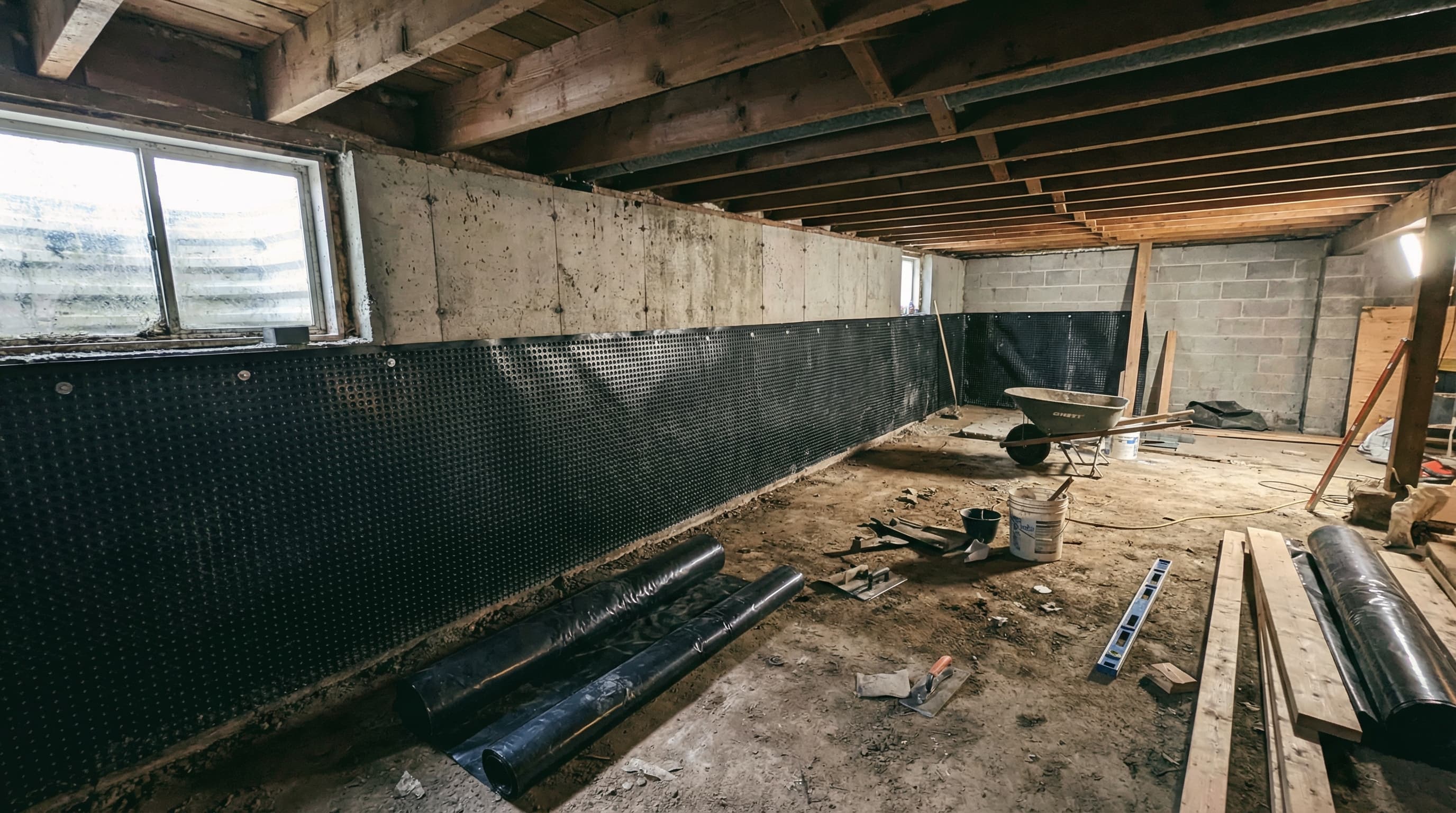
Sediment fencing, rock check dams at drainage points, wheel wash stations on larger jobs, silt socks at catch basins — these aren't nice-to-haves on a North Shore project. They're required, they're inspected, and the contractor is responsible for maintaining them throughout the excavation phase, not just installing them on day one. A cheap estimate often doesn't price this properly. You'll either pay for it in the job, or you'll pay for it in a stop-work order and remediation costs.
The Lynn Valley and Deep Cove conditions aren't the same as Lonsdale
It's worth being specific about neighbourhoods, because the site conditions vary dramatically across the North Shore. Older homes in the Lynn Valley and Edgemont area often have drainage systems that predate current municipal standards — surface grading toward the house, undersized catch basins, clay-pipe connections that need replacement before new work can tie in. These discoveries happen during demo, not during estimating.
In Deep Cove and the Woodcroft area, steep lots and proximity to ravine corridors mean infiltration is almost never feasible and geotechnical input is often required before drainage design can be finalized. Near the historic Lonsdale corridor in the City, older lot patterns and back-lane configurations add complexity to where surface drainage can legally discharge. None of these conditions show up on a Google Maps satellite view, and none of them are free to resolve.
The contractors who handle this well are the ones who've already done the research before they price the work — who know which neighbourhoods carry which risks, which municipal files to pull before drawing the site plan, and which questions to ask the geotechnical consultant early enough that the answers actually influence the design rather than just documenting a problem that's already locked in.
What to ask before you sign anything
If you're getting quotes on a North Shore renovation or new build that involves any excavation, grading, or drainage work, a few direct questions will tell you quickly whether the contractor has done this work in this jurisdiction before. Ask them specifically: does this project require a Soil Permit, and have they included the application and compliance costs in the quote? Ask whether a Stormwater Management Plan is required and who is responsible for preparing it. Ask whether infiltration is feasible on your specific lot, and if not, what engineered alternative they're proposing and at what cost.
A contractor who can answer those questions clearly and specifically — not vaguely or with 'we'll sort that out later' — has probably done this before. One who hedges or promises to look into it is probably pricing you based on a flatter, easier lot somewhere else in the Lower Mainland. The North Shore is not a flat, easy lot. The work here rewards contractors who understand that upfront, and it punishes everyone else.