The pre-1975 problem is worse here than people expect
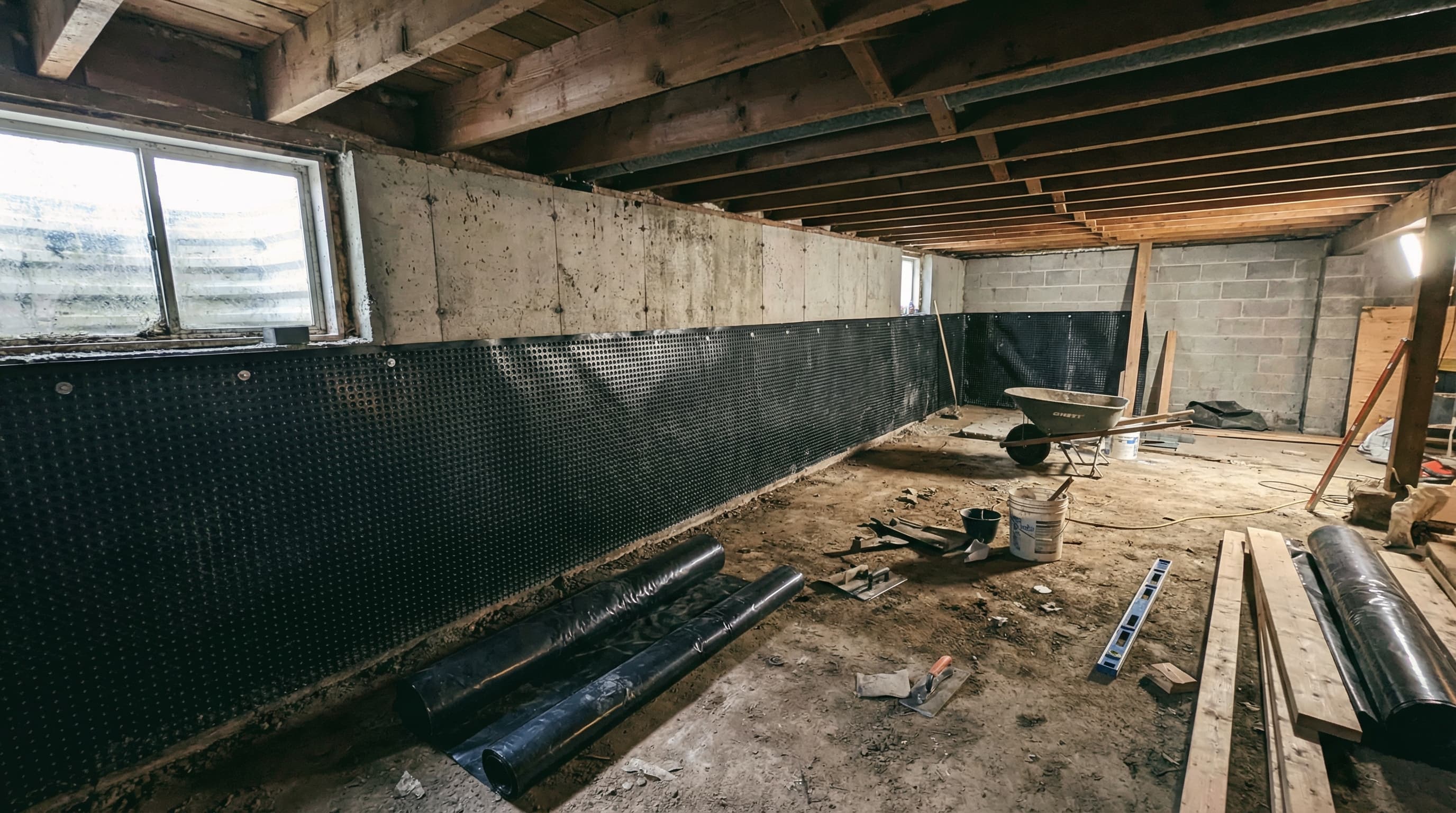
A large share of North Shore residential stock was built between the 1940s and mid-1970s. That era of construction had different standards — different materials, different wiring conventions, different assumptions about moisture management. When you open walls or floors in one of these houses, you find things that were never visible in any inspection report.
Asbestos is the most common surprise: floor tiles, pipe insulation, textured ceilings, vermiculite attic fill, and older drywall compounds can all contain it, and the testing-and-abatement process adds time and cost before any actual renovation work begins. Knob-and-tube wiring, which requires assessment and typically full replacement when it's encountered in a renovation zone, turns up in houses well into this era. Moisture damage behind tile, rotted sill plates, and compromised subfloor sections from decades of minor water intrusion are more rule than exception in older West and North Vancouver homes.
None of these are contractor horror stories — they're just what older houses contain. But they're not visible in a quote based on surface conditions, and they're not covered by a 10% contingency when the abatement bill alone comes in at $15,000 before demo is even finished.
Terrain adds a real premium that doesn't show in provincial averages
BC provincial averages for custom home builds run $400 to $550 per square foot. In Metro Vancouver the range stretches from $280 at the low end to $550 and above. On the North Shore, particularly in West Vancouver and the hillier parts of North Vancouver, that upper number is where most projects land, and the reason is terrain.
Steep lots mean more complex formwork for foundations and retaining walls. They mean more difficult access for concrete trucks and material delivery, sometimes requiring hand-carry or crane lifts that are routine cost on a Capilano Road lot but exceptional cost in Coquitlam. Drainage and grading on a sloped site requires more design, more materials, and more inspections than the same work on a flat lot. Excavation into bedrock, which is close to the surface in many parts of the North Shore, requires a completely different approach than excavating through soil.
These terrain-related costs aren't premiums that contractors inflate to profit from your particular lot. They're real additional hours, real additional materials, and real additional coordination that flat-lot estimates simply don't include. The contractor who gives you the same per-square-foot number for a Grouse Woods site as they'd quote in Burnaby Heights either isn't paying attention to your lot or is planning to price the difference as change orders later.
Trade labour is still the biggest moving part in 2026
Construction cost escalation in BC is expected to stay below 2% in 2026 — the slowest growth in Canada — which sounds reassuring until you look at what's actually stabilizing and what isn't. Materials have settled. Labour hasn't.
BC is looking at a shortfall of roughly 108,000 construction workers over the next decade, and 21% of the current workforce is expected to retire during that period. Skilled electricians, plumbers, and finish carpenters on the North Shore are booking four to six weeks out at minimum, and some trades in tight specialties — tile setters, good millwork installers, concrete finishers who do residential work — are running longer than that. Trades that are hard to book don't compete aggressively on price. You're not in a position to negotiate when their next three jobs are already confirmed.
The practical implication is that labour rates on the North Shore are at the high end of the Metro Vancouver range, and the margin between a well-run project and a poorly-run one is often measured in whether trades show up on schedule or whether they're pulled to other jobs while yours stalls. That's a management problem as much as a cost problem.
Material cost uncertainty hasn't resolved the way people hoped
There was an expectation in late 2024 that supply chains would normalize and material costs would settle. Lumber and some basic materials did stabilize. But the ongoing trade friction between Canada and the United States — tariffs on steel, engineered wood products, and fixtures sourced through US distribution channels — is still creating periodic price swings and lead-time uncertainty that makes budgeting at the start of a project less reliable than it was in more stable periods.
Long-lead items are where this bites hardest. Specialty windows, custom cabinetry, European appliances, HVAC equipment — these are often quoted with price-validity windows of 30 to 60 days. If a project slows down due to permit delays or sequencing issues, the quote you used to build your budget may have expired before the purchase order goes in. This is a relatively new dimension of cost risk that didn't exist at the same scale in earlier cycles.
The regulatory costs that don't appear in any estimate template
North Shore-specific regulatory requirements add real cost to projects here that you simply don't encounter at the same rate elsewhere. The District of North Vancouver's Soil Permit requirement, the stormwater management plan requirements in the City, geotechnical assessments required on sloped lots — these cost money to prepare and money to comply with, and they're rarely itemized in contractor estimates that weren't built for this geography.
Design review timelines are also longer on the North Shore than many owners expect. Permit processing for a larger renovation or new build can run four to six months in North Vancouver's building department, and that clock doesn't start until the drawings are accepted as complete. If the initial submission comes back with comments, which is common, the timeline resets partially. A project that an owner imagined starting in spring 2026 based on permit submission in late 2025 can easily slide to fall 2026 if the permit path isn't managed carefully.
How to actually budget for a North Shore renovation in 2026
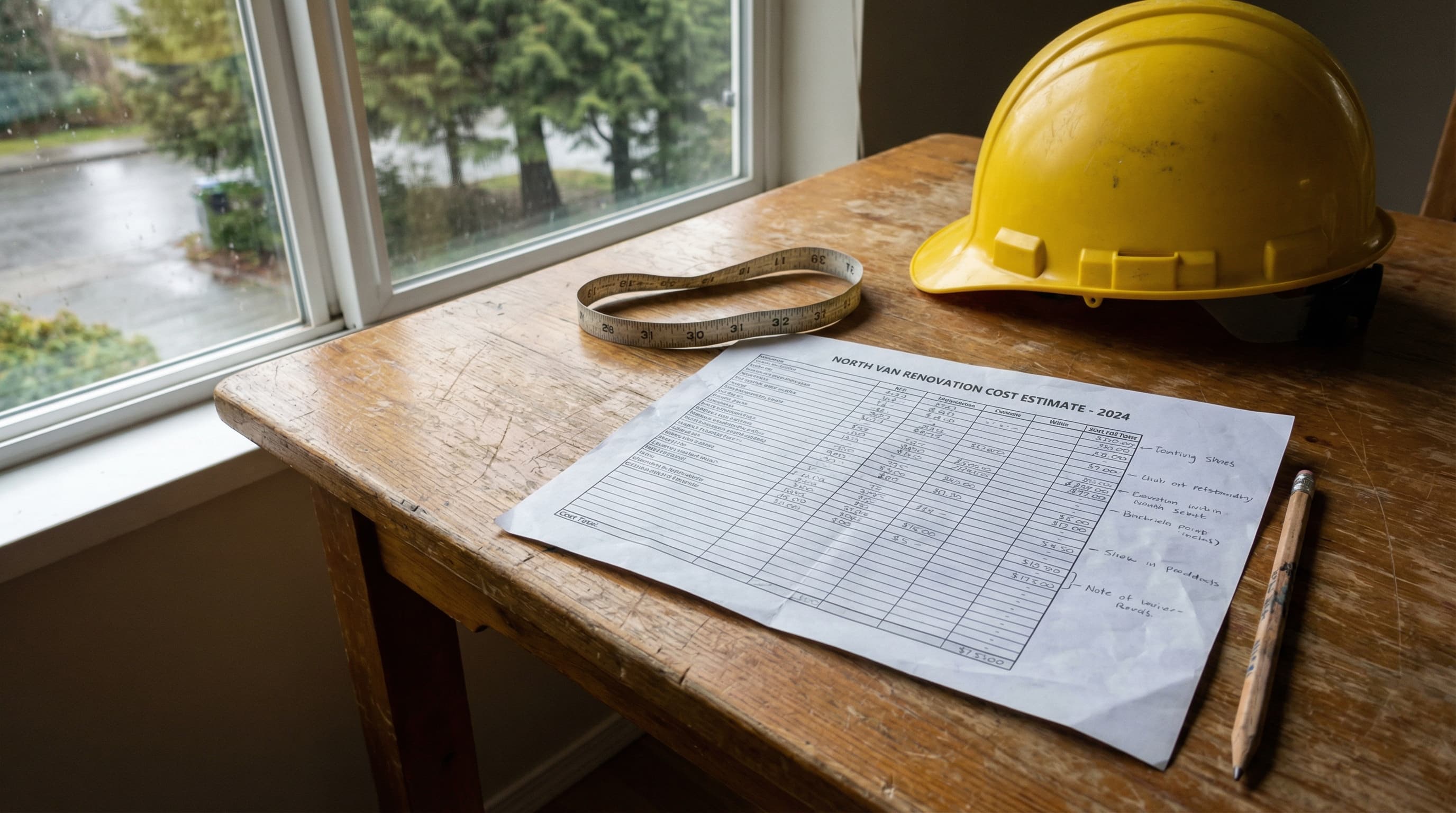
The honest answer is that for an older home on a sloped North Shore lot, the contractor quote times 1.20 to 1.25 is a more realistic working budget than the standard advice of 1.15. That's not pessimism — it's what the data from projects in this geography supports. The 20 to 25 percent buffer absorbs one serious discovery in the walls, absorbs one regulatory requirement that wasn't priced, and absorbs one trade delay that pushes the schedule by three weeks.
More useful than a percentage rule, though, is pre-construction due diligence. A geotechnical review on a sloped lot, a hazardous materials assessment on a pre-1975 home, and a detailed regulatory review of the permit path for your specific lot and scope — these cost a few thousand dollars upfront and can prevent $40,000 surprises mid-project. The contractors who regularly work on the North Shore factor this into how they approach a new project. The ones who don't work here regularly often don't.
The other thing worth doing before you sign a contract is asking specifically how the contractor handles mid-project discoveries. What's their process when demolition reveals something unexpected? How are change orders documented and priced? Is there a pre-agreed day rate for minor scope additions, or does everything go through a full formal change order process? The answers tell you a lot about whether this contractor has actually managed complex renovation work before, or whether they've mostly done straightforward jobs and are figuring it out as they go.