What Bill 44 changed and what it didn't
BC's Bill 44, which came into force in 2024, required municipalities to allow small-scale multi-unit housing on land previously zoned for single-family use. In practical terms, that means most RS-zoned properties in North Vancouver — the City and the District — can now have both a secondary suite within the main house and a detached accessory dwelling unit or laneway home on the same lot. Previously, many properties were limited to one or the other.
What Bill 44 didn't do is override all local regulations. Each municipality still controls setbacks, lot coverage, height limits, parking requirements, and design standards. North Vancouver's implementation of the provincial legislation maintains those local controls, which means your specific lot's feasibility depends on dimensions and site geometry, not just zoning designation. A 33-foot-wide lot with an existing detached garage might accommodate a laneway unit differently than a 50-foot lot with open rear yard. The zoning change opened the door — your lot's physical conditions determine whether you can actually walk through it.
City vs. District: the requirements are not the same
This is where a lot of confusion starts. The City of North Vancouver and the District of North Vancouver are two separate municipalities with two separate building departments. They've implemented the provincial housing legislation differently, and their secondary suite and accessory dwelling regulations have meaningful differences in setback requirements, maximum unit sizes, parking requirements, and permit processes.
The City of North Vancouver, for example, requires a separate electrical subpanel for any new secondary suite — this is a non-negotiable baseline cost. The District has slightly different requirements around exterior access and unit separation. West Vancouver has its own implementation again. If you're getting advice from a contractor who works mostly in one jurisdiction and you're in another, some of what they tell you about requirements may simply not apply to your property.
The most reliable way to understand what your specific lot can support is to pull the property's zoning summary from the relevant municipal GIS system and then have a pre-application meeting with the building department before you spend money on drawings. Both the City and District of North Vancouver offer these meetings — they're free, they take about 30 minutes, and they can clarify regulatory questions that would otherwise take months of plan-checking to resolve.
What it actually costs in 2026
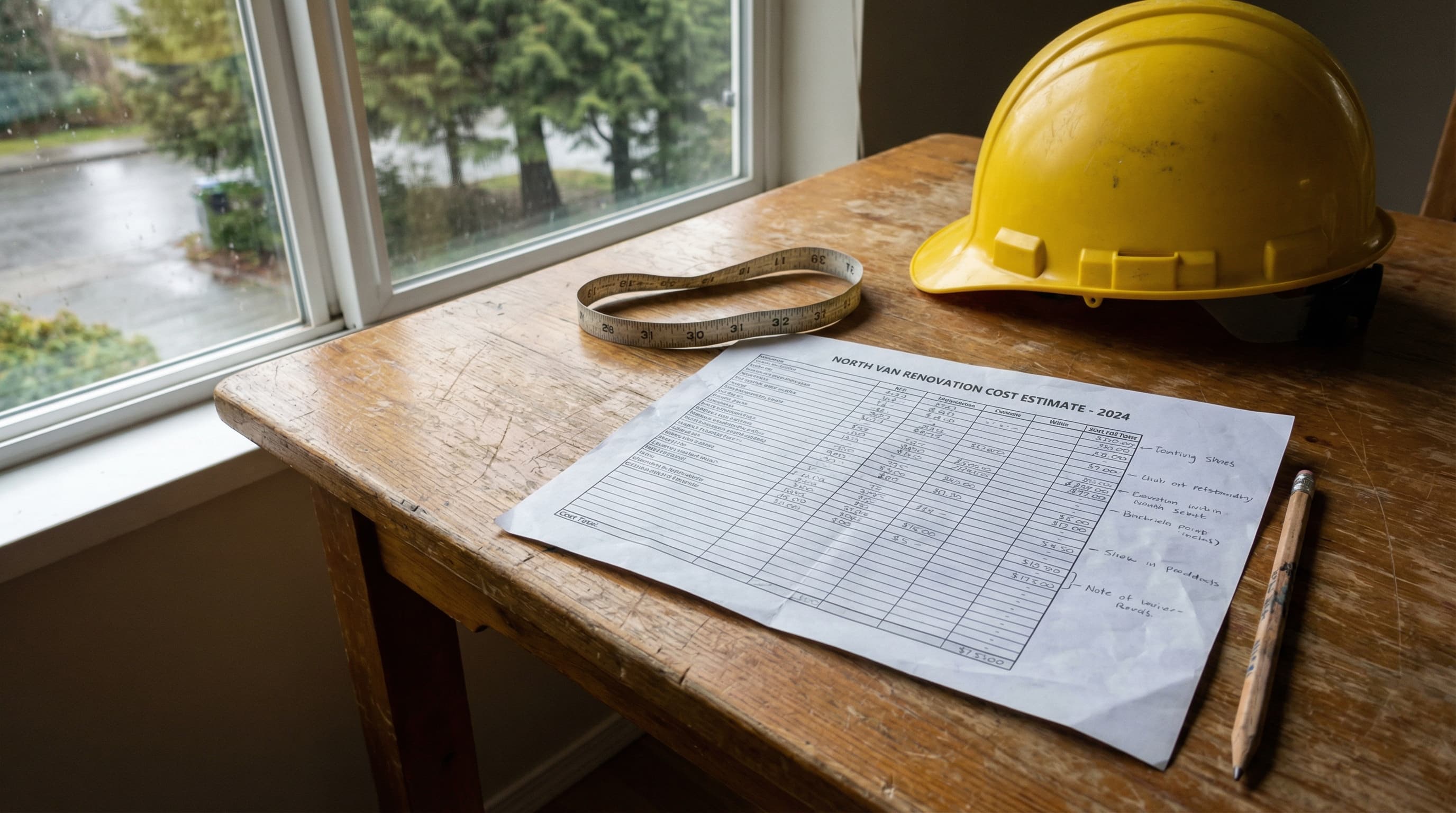
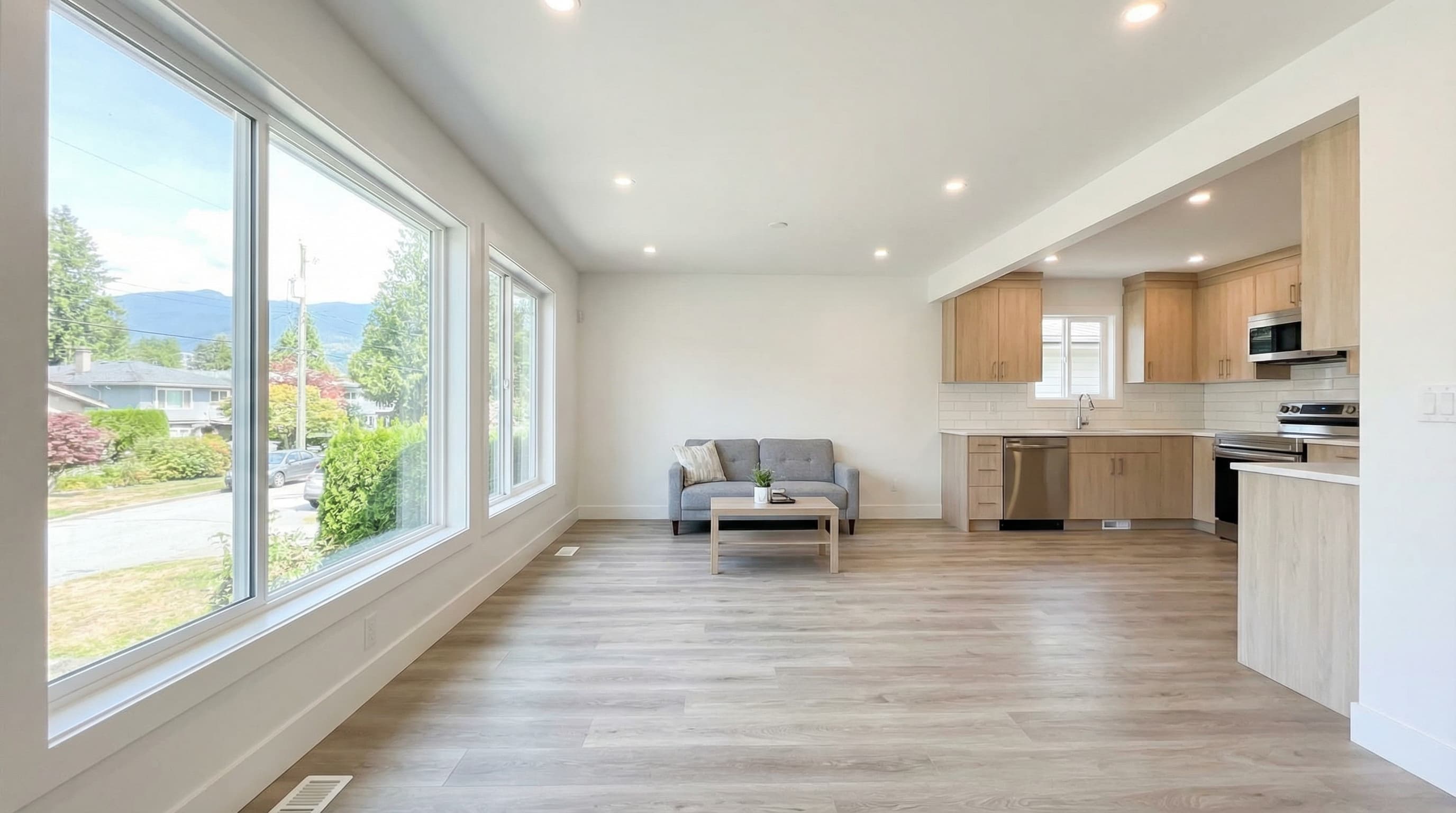
A fully permitted legal secondary suite in the Greater Vancouver area — basement conversion with proper egress windows, ceiling height compliance, separate electrical panel, sound insulation, mechanical separation, and a finished kitchen and bathroom — runs between $70,000 and $120,000 all-in for a standard basement conversion. Add premium finishes and that number moves toward $180,000. These aren't inflated numbers — they reflect current trade costs, permit fees, and the actual scope of work required to meet code and get a final occupancy sign-off.
A detached laneway home or accessory dwelling unit is a different category entirely. You're building a new structure, which means full foundation work, framing, roofing, mechanical, and envelope — typically $200,000 to $350,000 for a well-built 400 to 600 square foot unit, depending on site conditions and finish level. The costs vary most based on site access (tight lane access drives up material handling cost), foundation requirements (bedrock or high groundwater on North Shore lots can complicate this significantly), and whether existing services can be extended or new connections are required.
The current 2-bedroom turnover rent in Greater Vancouver sits around $2,700 per month. At that rate, a $90,000 suite conversion recovers its cost in about seven to nine years — not accounting for the tax implications of rental income or the effect on property value, both of which are worth discussing with an accountant before you proceed. The financial case is real. It's not instantaneous, but for owners who plan to hold their property for ten or more years, the math tends to work.
The North Shore terrain problem for basement suites
This is where the North Shore differs meaningfully from flatter municipalities where secondary suite conversions are more routine. Basement suites need ceiling height — BC Building Code requires a minimum of 1.95 metres in the habitable areas. Older North Shore homes with low basement clearances often need slab lowering or underpinning to reach code minimum, and that's a significant structural intervention that can add $30,000 to $60,000 to a project that looked simpler from the outside.
Egress windows in basement suites require openings large enough for emergency exit. On sloped lots with partially buried foundations, cutting those openings sometimes requires retaining wall modifications and drainage redesign — not just a window replacement. The same terrain conditions that make North Shore lots attractive and private also make basement renovation more complex than a flat-lot property in a comparable price range.
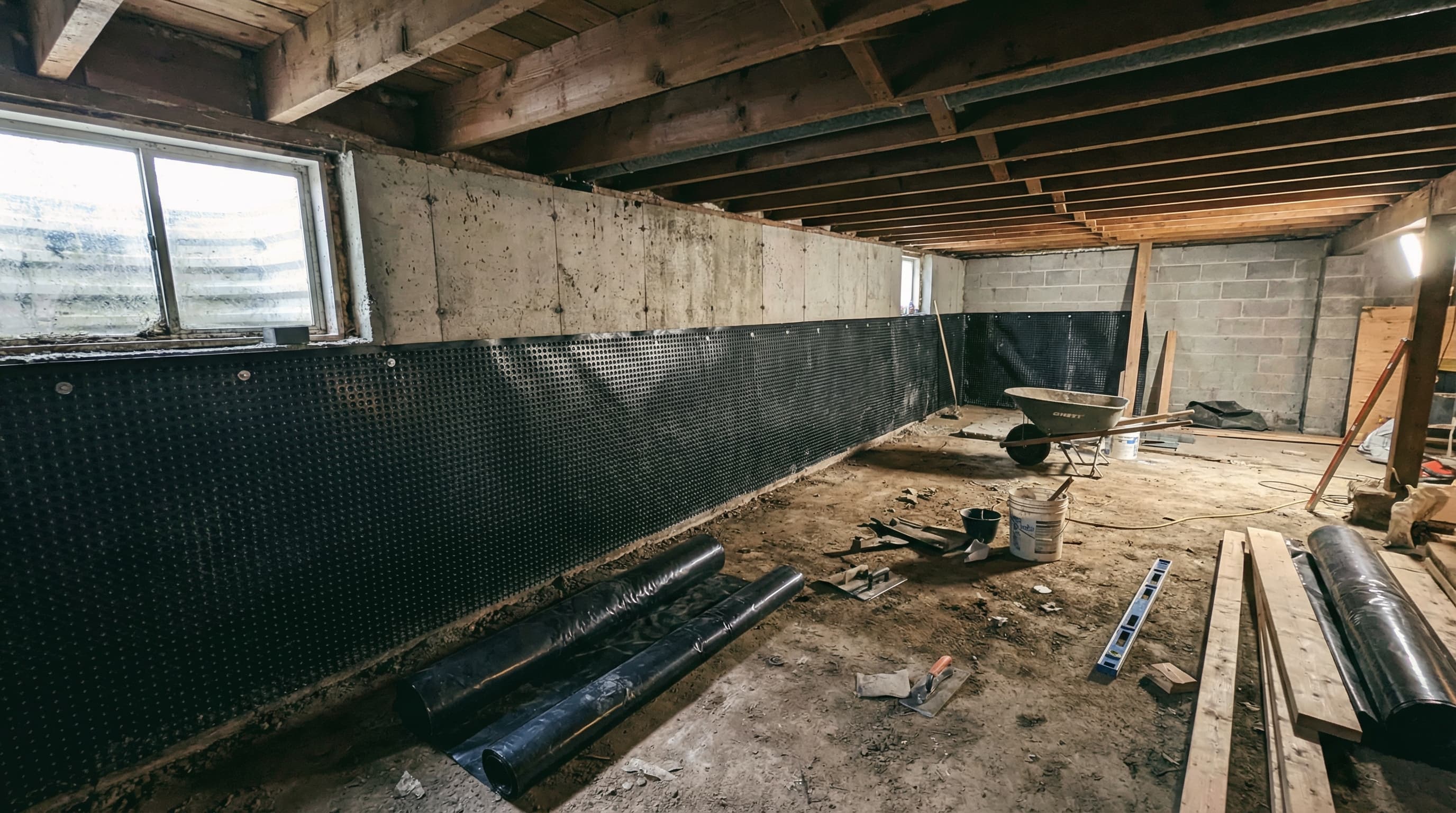
High groundwater is another condition that surprises owners. Parts of Lynn Valley, sections near the waterfront in both the City and District, and lower-lying areas near Mosquito Creek and Lynn Creek have seasonal groundwater that affects what's buildable in a basement suite. A slab that's dry in summer may see water intrusion in late fall and winter. Addressing that with a proper drainage membrane and sump system is achievable — but it needs to be designed and budgeted before construction, not discovered and improvised during finishing.
Permit timeline: what to actually expect
The City of North Vancouver's building department is processing secondary suite and simple renovation permits in the six to ten week range for straightforward applications. More complex projects — anything involving structural changes, new detached structures, or significant site work — can run longer, particularly if the initial submission comes back with comments requiring revised drawings.
The full project timeline from permit submission to move-in, for a standard basement suite conversion with no major surprises, typically runs 12 to 20 weeks. That accounts for permit processing, pre-construction lead time on materials and trade scheduling, the construction phase itself, and the final inspection sequence. Homeowners who plan to have a suite occupied by a specific date — say, September for a student rental — need to have their permit submitted by May at the latest, and preferably earlier if there's any uncertainty about the application being straightforward.
One thing that delays applications more than almost anything else is submitting drawings that don't address the stormwater management requirements upfront. The City now requires stormwater documentation even for relatively modest renovation projects, and a permit application that doesn't include it will come back with a deficiency notice. Build that into the drawing package from the start rather than treating it as an afterthought.
The window that exists right now
Greater Vancouver's rental vacancy rate rose to 3.7% in 2025, up from 1.6% in 2024 — the highest it's been since 1988. That shift has reduced the urgency that drove secondary suite conversions during the rental crisis years. But the underlying demand fundamentals on the North Shore haven't changed: proximity to downtown, strong school catchments, limited new rental supply, and an aging housing stock where a well-finished suite in a good neighbourhood still rents quickly.
The owners who built suites in 2022 and 2023 are collecting rent now. The owners who are starting that process in 2026 will be collecting rent in 2027, assuming they start the permit process in the next few months. The regulatory landscape is probably the most permissive it's been in decades. The financial case is solid for long-term holders. The main thing that stops most people is not knowing clearly what the process actually involves — and hopefully this gives a more accurate picture of that than the generic articles tend to provide.